 +(91) 8448822366
 neurohopesofficial@gmail.com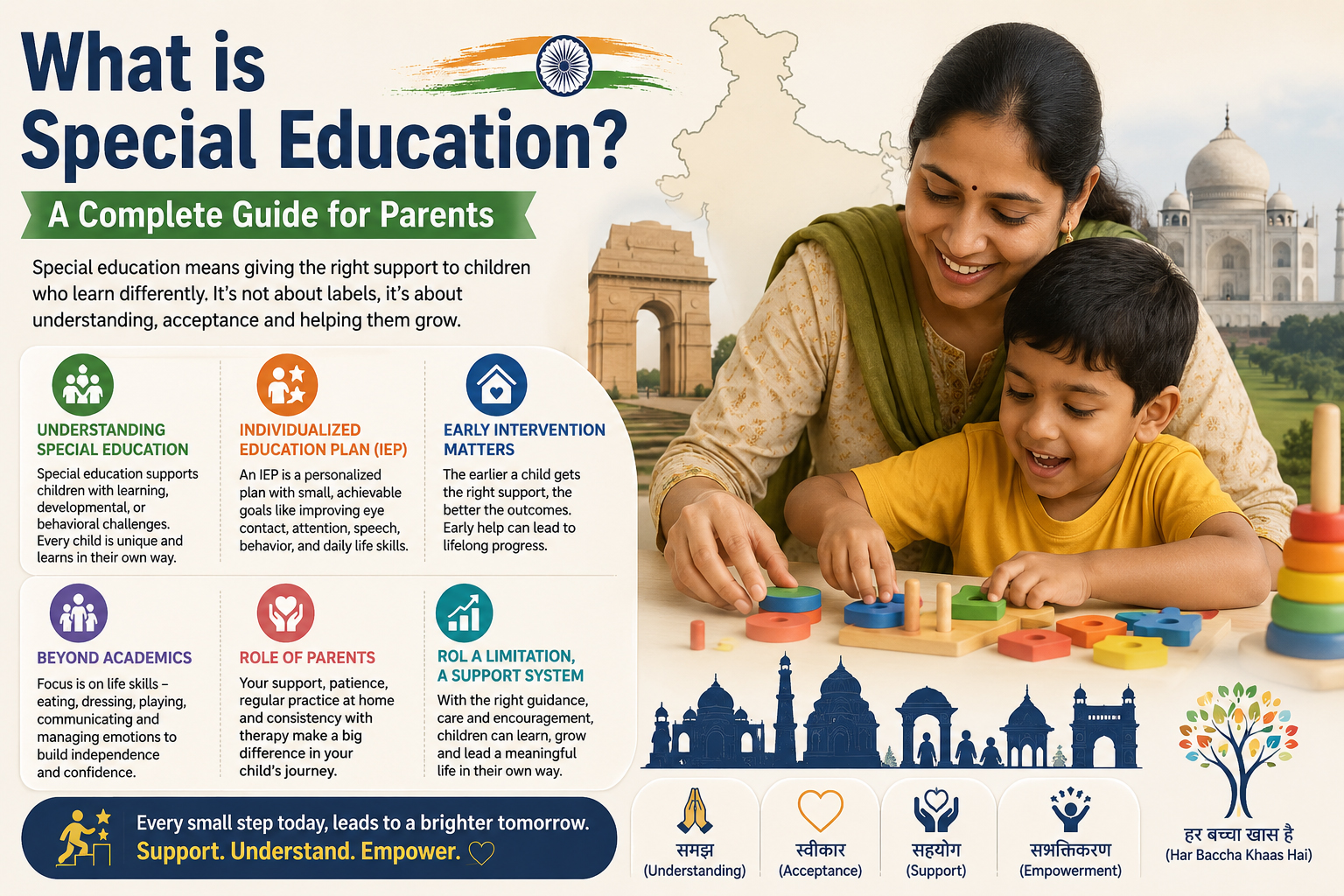
As a parent, it can feel confusing and overwhelming when your child is not learning, communicating, or behaving like other children of the same age. You may notice signs such as delayed speech, limited eye contact, poor attention span, difficulty following instructions, or challenges in social interaction. Understanding these early signs is important, and this is where special education can make a significant difference.
Understanding Special Education
Special education is a personalized approach to teaching designed for children who learn differently due to developmental, learning, behavioral, or communication challenges. It is not about labeling a child—it is about identifying their unique needs and providing the right support to help them reach their full potential.
Every child learns differently. While some children may need extra help with speech and language, others may require support with attention, behavior, social skills, or academic learning. Special education ensures that teaching methods are adapted to suit each child's individual learning style.
How Does Special Education Work?
Unlike traditional classroom teaching, special education programs are customized according to a child's strengths and areas of difficulty. A team of professionals may work together to support the child, including:
- Special Educators
- Speech Therapists
- Occupational Therapists
- Behavioral Therapists
- Child Psychologists
These professionals collaborate with parents to create strategies that help children develop essential skills and become more independent.
What is an Individualized Education Plan (IEP)?
An Individualized Education Plan (IEP) is a personalized roadmap designed specifically for a child's developmental and educational needs.
An IEP may include goals such as:
- Improving eye contact
- Following simple instructions
- Increasing attention span
- Developing communication skills
- Enhancing social interaction
- Building self-help and daily living skills
Progress is measured through small, achievable milestones, and every improvement is considered a success.
Beyond Academics: Building Life Skills
Special education is not limited to reading, writing, or mathematics. It focuses heavily on developing practical life skills that help children function confidently in everyday situations.
These skills may include:
- Eating independently
- Holding a pencil correctly
- Dressing and grooming
- Playing and interacting with peers
- Managing emotions and behavior
- Developing communication and social skills
The goal is to help children become as independent as possible while improving their overall quality of life.
Why Early Intervention Matters
One of the most important factors in a child's development is early intervention. Research consistently shows that children who receive support at an early age tend to make better progress in communication, learning, behavior, and social development.
Waiting for a child to "grow out of it" or "catch up naturally" may delay important opportunities for growth. Early assessment and intervention can provide children with the tools they need during their most critical developmental years.
The Role of Parents in Special Education
Parents play a crucial role in a child's developmental journey. Consistent support at home can greatly enhance the effectiveness of therapy and educational interventions.
Parents can help by:
- Following therapy recommendations
- Practicing learned skills at home
- Maintaining a structured routine
- Encouraging communication and social interaction
- Celebrating small achievements
- Staying patient and positive throughout the process
Remember, progress may be gradual, but every small step contributes to long-term success.
Conclusion
Special education is not a limitation—it is a support system designed to help children learn, grow, and thrive in their own unique way. With the right guidance, early intervention, professional support, and family involvement, children can develop meaningful skills, build confidence, and lead fulfilling lives.
Every child deserves the opportunity to succeed, and special education helps make that possible.